A LEADING LEARNING EXECUTIVE BRIEFING
How and Why to Build Your
Blended Learning Playbook
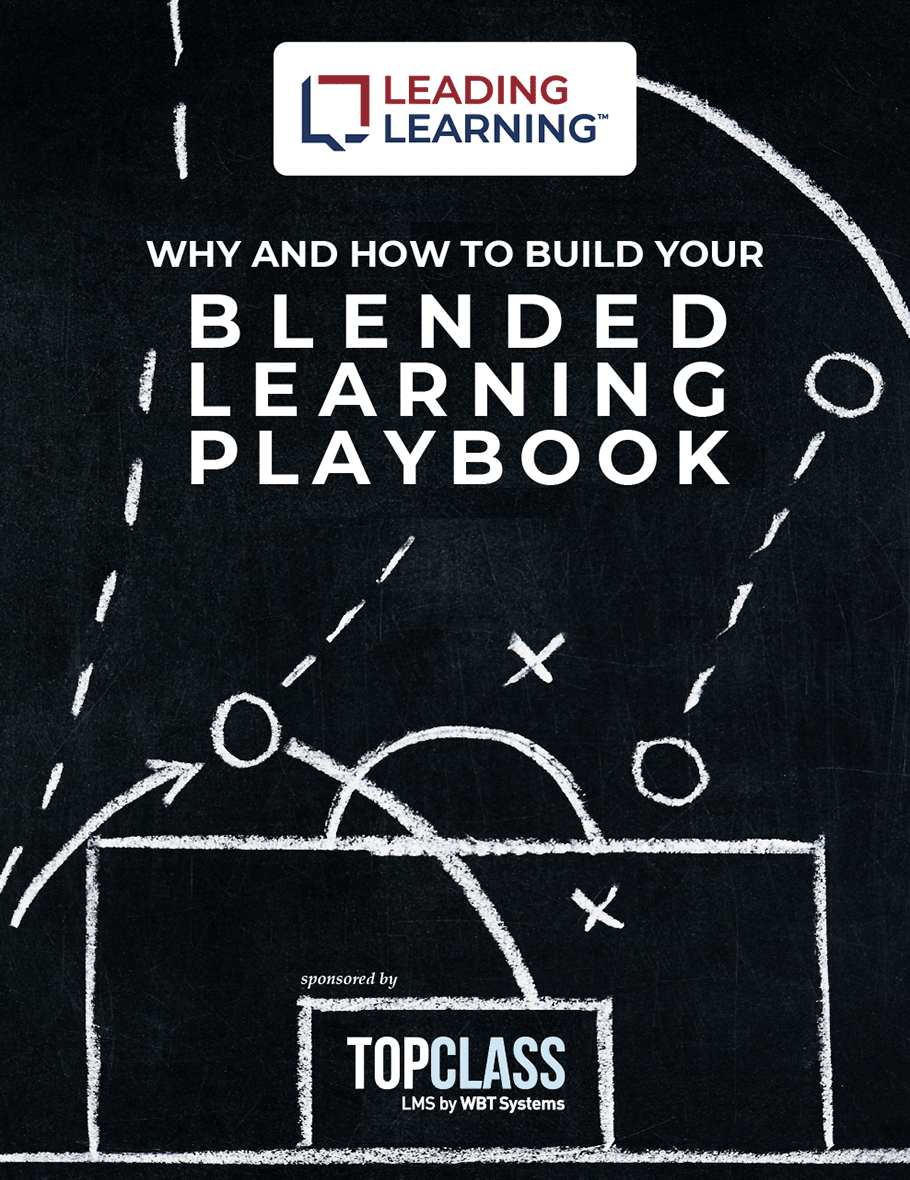
Understand the Opportunity: Get insights into recent growth as well as benefits and challenges.
Explore Valuable Examples: See how other learning businesses have implemented.
Leverage the STEP Framework: Learn four dimensions of effective blended experiences.
Use the form below to download your complimentary copy.
"*" indicates required fields
We’re grateful to TopClass for sponsoring this executive briefing so that we can make it available to Leading Learning subscribers at no charge.
We encourage you to find out more about how BenchPrep can help you strategically grow your continuing education, professional development, and exam prep business.
Excerpt From the Briefing
Learning is a process, not an event. One-off experiences rarely result in the changed behavior most learning businesses want for their learners. By mixing components, blended learning involves at least two events—and it often involves many more spread across weeks, months, or a year.
This means a primary benefit of blended learning is efficacy. Because it takes place over a longer period and because it involves multiple touchpoints, it’s more effective than a single self-paced e-learning module or a single half-day in-person workshop.
Blended learning also allows designers to match delivery mode to the desired learning outcome or content. Didactic, information-conveying content may lend itself well to self-paced online delivery, where individual learners have the option to view videos at twice the normal speed or view them repeatedly based on their prior knowledge of and experience with the topic, for example. A pre-assessment might even allow learners to skip entire portions of the content they’re already familiar with and focus their time instead on new information and ideas.
Higher-order thinking, like synthesis and evaluation, may benefit from in-person discussions or student presentations of work projects—projects made possible by what they learned through online elements before showing up in a room together.
For learning businesses, potential benefits of implementing blended learning include these five:
- Higher learning value and impact
As already mentioned, blended learning tends to be more effective than other approaches, offering learning businesses the potential to deliver more value and, ultimately, greater impact through the learning experiences they offer. - Increased pricing flexibility
Because learners typically perceive and appreciate the greater value and impact that blending learning offers, it’s often possible to charge significantly more for blended learning programs. Additionally, adding blended components to existing offerings—face-to-face sessions at your annual conference to complement online offerings or on-demand content as pre- and or-post event bonuses, for example—enables you to elevate the value of these offerings and raise prices accordingly. - Better ability to serve business buyers
Employers are also likely to appreciate the greater value and impact that blending offers. As a result, a blended approach can be a compelling offering for your business-to-business (B2B) selling. Cohort-based blended offerings aimed at onboarding new employees or developing potential leaders, for example, may be very attractive to business buyers—and those buyers may be willing to pre-pay to help underwrite the development costs of such offerings. - Enhanced relationships with subject matter experts
Getting full value from your subject matter experts (SMEs) is challenging with typical Webinar formats and even with well-designed self-paced courses. In our experience, the best subject matter experts are interested in achieving real impact with their teaching, and a blended approach offers a way for you to work more deeply with your best SMEs to make that happen. - Stronger differentiation from competitors
Blended offerings stand you out from competitors that offer only face-to-face options or only online options. If you have access to a well-respected group of subject matter experts—as many trade associations, professional societies, and academic continuing education units do—the ability to offer real-time, in-person access to these experts can be a strong differentiator.
To learn more about why and how to implement blended learning opportunities in your portfolio, download the briefing today!