
Many organizations say they are mission-driven. But mission drift is real and often happens because of the very structures and activities organizations have been told represent best practices. So what does it take to build an organization that stays true to what it set out to do?
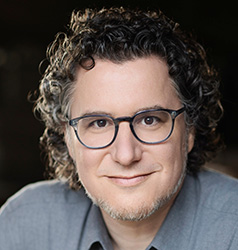
In this episode of the Leading Learning Podcast, co-host Jeff Cobb talks with Eric Ries, entrepreneur and author of the books The Lean Startup and Incorruptible. They discuss how Incorruptible builds on the lean startup thinking Eric is known for, why the for-profit versus nonprofit distinction matters less than most assume, and how a four-part governance framework—built around compliance, purpose, coherence, and integrity—can help any organization stay aligned with its mission.
To tune in, listen below. To make sure you catch all future episodes, be sure to subscribe on Apple Podcasts, Spotify, or wherever you listen to podcasts.
Listen to the Show
Access the Transcript
Download a PDF transcript of this episode’s audio.
Read the Show Notes
Celisa Steele: [00:00:03] If you want to grow the reach, revenue, and impact of your learning business, you’re in the right place. I’m Celisa Steele.
Jeff Cobb: [00:00:10] I’m Jeff Cobb, and this is the Leading Learning Podcast.
Jeff Cobb: [00:00:16] Mission drift doesn’t happen all at once. It creeps in—and, according to our guest, it often happens because organizations are following the so‑called best practices for how to grow and govern.
Celisa Steele: [00:00:28] Our guest is Eric Ries, entrepreneur and author of the landmark book The Lean Startup and, most recently, Incorruptible: Why Good Companies Go Bad…and How Great Companies Stay Great. Eric’s ideas—including “minimum viable product” and “build-measure-learn”—have fundamentally shaped how the world thinks about products and innovation.
Jeff Cobb: [00:00:51] If The Lean Startup is about how to build something worthwhile, Incorruptible tackles the next question: How do you keep it that way?
Celisa Steele: [00:00:58] Eric shares his provocative argument that the for‑profit versus nonprofit distinction is largely a red herring, and he offers a new definition of what it actually means to be a for‑profit organization that may surprise you.
Jeff Cobb: [00:01:12] Yes, and Eric lays out a four‑part framework for governance, along with a “harder is easier” principle that reframes what it takes to build lasting trust in an organization.
Celisa Steele: [00:01:23] If you’re involved in running any learning business (no matter its tax status) and you want a challenging new perspective on how organizations lose their way and what it takes to build one that doesn’t, then stick around for this conversation with Eric Ries.
Minimum Viable Product
Jeff Cobb: [00:01:45] We’re here mainly to talk about Incorruptible—your new book—and I’m looking forward to diving into that, but I don’t think I can have you on the show and not ask something about The Lean Startup. Having been somebody who’s been an entrepreneur, been involved in startups, I’m very familiar with it; I’ve got it on my iPad with many notes, highlights, and that sort of thing. One of the concepts from it that we use repeatedly in our work with organizations is minimum viable product and encouraging them to put that minimum viable product out there, have that build-measure-learn cycle in what they’re doing. I’d love your perspective—15 years out from publishing the book, how has that concept held up from your viewpoint, and how has it evolved over that time period?
Eric Ries: [00:02:28] It’s held up pretty well. People get it confused all the time because people think, “Oh, if we’re just building a minimum product, that’s opposed to quality or long‑term planning or something like that.” But the point of minimum viable product is simply, if we’re in a situation where there’s going to be a long number of steps that have to unfold in order for whatever the thing is to be successful—I can tell you stories about where the thing itself is like a whizbang gadget; a cool platform; a deep‑sea, oil-well-drilling platform; an internal process change; or a new curriculum (I really have seen every kind of thing you can imagine this thing can apply to)—there are two dimensions (I said this 15 years ago or more) of the world that are going to make this more and more difficult. One is the changes in the technological landscape are going to democratize the tools of production but also drop cycle times. So things are going to get faster. It’s going to become easier for more people to build things, try things, communicate things. That prediction’s held up pretty well.
Eric Ries: [00:03:29] But, at the same time, we’re going to see a great increase in the level of underlying uncertainty about what’s going to work. Partly, number one, because consumers, employees, and whoever we’re trying to reach, students, they all have more options than ever before, and they’re facing a bewildering array of experts, advice, best practices, advertising, and the fragmentation of social media. When we have that combination of fast cycle time capability and extreme uncertainty in the environment, we need a process, a structured way of thinking about what to do with the infinity of things we might do. Traditional management, general management that has been practiced all over the course of the 20th century, was based in two principles: the principle of planning and the principle of forecasting. If you go back and read the foundational works of 20th-century management thinking—Fred Taylor. I’m thinking especially of Alfred Sloan’s My Years with General Motors because he really lays out how difficult it was to run a business without these concepts. It was very difficult. The key idea is that, in order to make a plan, in order to hold people accountable to that plan, we need to have an accurate forecast of what’s supposed to happen. If you want to claim credit for having done a good job as a manager, you can’t just say, “Well, I sold more cars this year than last year.” Maybe the economy’s up, and everybody sold more cars this year.
Eric Ries: [00:04:47] Similarly, you can’t say you’re fired because you sold fewer cars than last year. Maybe we’re in a recession, and, if you did slightly less bad than everybody else, that’s a win. The key is to be able to forecast and beat the forecast. Most of us have been taught that in our careers, not as an idea but just as the way work is done. The hidden assumptions are the killers, always. Most people that I talk to cannot imagine that this idea ever had to be invented. To them, it’s as natural as gravity. But it’s not. It was an idea. It was invented at a certain time. It has certain strengths and also certain liabilities—the biggest one, where do accurate forecasts come from? Accurate forecasts require a long and stable operating history from which to extrapolate. And who feels like the world is getting more stable every day? Uh‑oh. First of all, whenever we’re doing something new, we’re doing entrepreneurship, no matter what it says on our business card. A lot of people become what I call “involuntary entrepreneurs” when the world changes around them, and, all of a sudden, they’re having to scramble to reinvent something they’ve done consistently, maybe for many, many years. Parallels to AI are pretty obvious. That is the essence of minimum viable product: to figure out what is the structured, scientific, least‑effort way we can discover whether the core business hypothesis that we are operating against is true or false.
From Building Something Worth Protecting to Keeping Something Incorruptible
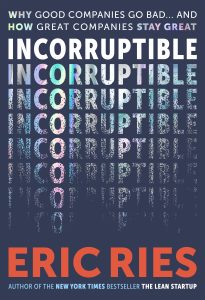
Jeff Cobb: [00:06:10] I love the whole idea of operating against the hypothesis, which means you have to test it. You have to measure. You have to learn. That’s the whole build‑measure‑learn cycle. I’m probably paraphrasing language from the new book—or at least how the book is presented to me—that The Lean Startup, in many ways, was about how to build something worth protecting. But now you’re moving into how to protect it because sometimes things don’t work. You build it, it’s great, and then things go awry. Can you talk a little bit about what prompted you to write Incorruptible and what’s at the heart of that book?
Eric Ries: [00:06:46] I’ll tell you a story. A founder came to see me for help, but he was not your typical Y Combinator, two kids in a garage. He was a tenured university professor working in a biology lab. He had had a breakthrough in the lab that he was trying to turn into a spinout from the university. To protect his privacy, I’ll just call him “the professor.” What the professor was trying to do was a technology that could literally cure dozens of diseases—or it could unleash untold and horrific bioweapons. Imagine having like a ChatGPT, but you could just make me a new molecule. It was that powerful.So he was having this very unusual problem. He was trying to recruit other university professors to join his team and leave their tenured labs and join him. And they wanted to do it. It was going very well, except they kept asking him questions that he couldn’t answer. Questions like, “How can we trust that this technology will be used for cures and not for evil?” He’d be like, “Oh, don’t worry. I have good intentions.” And that wasn’t getting it done. They were like, “Okay, but aren’t you making a for‑profit company?” “Yes, but we’re mission‑driven.” “Oh, are you? But what about your investors? Are they bought into the mission?” “They definitely said so.” “That’s not too satisfying. What if they were to try to pressure you to do something bad?” “Oh, don’t worry. I would say no.” “What if they fire you?” “I don’t know. They won’t do that.” It was not very reassuring.
Eric Ries: [00:08:30] Anyway, he was like, “How do I be a for‑profit company but still mission‑driven?” Meanwhile, if he talked to investors about it, if he gave them even the slightest hint that he had concerns about the mission, they’d be like, “Doesn’t sound like you’re very serious about a business.” He felt trapped. Stuck. At the same time, I happened to be going to an event. I was on my way to an event when I was talking to him. The event was for a founder friend of mine who was at the end of his journey. This guy was just starting his entrepreneurial journey. The CEO I was going to the event for had been CEO for 15 years of a company he had built from nothing into a multi‑billion‑dollar success. And I was explaining that I had to get off the phone because I had to go to this event. I’m explaining there were going to be 1,000 people here to talk about the CEO and the things that he had built. I was watching people trickle into the event. I saw people that I knew the CEO had even fired, who had flown back at their own expense to come to this event for him. And the guy was like, “Wow, mad respect. That’s the kind of CEO I want to be one day.”
Eric Ries: [00:09:13] I was like, “I’m sorry. I’m clearly not making this clear. This is not a party. This is a wake.” He said, “What?” I said, “Yes, he doesn’t work there anymore.” He had made literally billions of dollars for his investors, and it wasn’t enough. He’s been kicked out. Now the company’s in new hands. They’re taking the company in a new direction. So we’re kind of going there to celebrate, but we’re kind of going there to mourn something that was lost. And he was like, “Wait, are you saying that’s going to be me one day?” I said, “Yes, this is what I’m trying to tell you. I’ve been doing this for 15 years now. I’ve watched so many people lose control of the thing that they made, sometimes because they get fired by their investors, sometimes because their board betrays them, sometimes because the organization becomes bureaucratic, malignant, or worse, and they can’t control or understand why.” He was like, “But is what I’m asking you for help with possible? Can I build an organization that is incorruptible?”
Eric Ries: [00:10:10] I said, “It’s a good news/bad news situation. The good news is, yes, I do believe it is possible. The bad news is you’ve already taken steps in the wrong direction because you are following the best practices that everyone says are the very best ways to build an organization. But, actually, our modern best practices about how organizations should be built, structured, and governed are, in fact, value‑destroying.” I asked him, “Are you willing to go with me and look at the evidence that this is so? Because I know it’s a bold claim.” And he was willing. Thanks to that willingness—after I went to the party—we reconvened and put his company on a new and totally different course that, ultimately, I think, is going to lead to that technology being used in a safe way rather than a dangerous way. But this is the phenomenon we see across our economy—companies and organizations are being surgically deboned, fed into the meat grinder of financialization, and losing their integrity, coherence, values, and even their soul. There is something we can do about it, but it’s going to require a radical rethink of dogmas that we’ve all been taught.
Jeff Cobb: [00:11:15] Your target in the book is more the for‑profit company, the corporation beholden to shareholders. But anybody who’s listening to this (and we have a lot of nonprofit listeners) recognizes this same pull in just about any type of organization where, over time, you lose sight of the core mission and where you were really trying to go, and other things slip in and take over.
Corruption as a Design Failure and Overfinancialization
Jeff Cobb: [00:11:42] Core to this book, as I understand it, is that the corruption is often, maybe most of the time, a design failure more than a moral failure. Can you talk about that? And what are some of the earliest signs a company or organization might see that the design is somehow wrong, that they’re not on that right path?
Eric Ries: [00:12:02] Let me address both things that you said because this problem we tend to talk about as a business problem or originating from the for‑profit sector has metastasized out of for‑profit. Part of it is we have financialized everything in our economy. In the book, I have discussions, stories, and evidence about how the same phenomenon is happening at hospitals, universities, political parties, journalism, sports teams, in so many places you wouldn’t expect it to show up—transit, construction costs, and public sector stuff.What’s going on is our grandparents lived a life of separately defined civic spheres. The civic sector, public sector, was distinct from private sector, was distinct from journalism—the so‑called fourth estate was a separate estate. Sports teams were totally separate. Whereas today, if you look at those areas, you’ll hear people cynically say, “Once money gets involved, what are you going to do?” Think about the role of a sports league commissioner compared to the days of the great Kenesaw Mountain Landis, who purged baseball after the Black Sox scandal. Now we have scandals like that a couple times a year. Everyone’s like, “But the commissioner works for the owners. The owners just want to make money. What do you expect?”
Eric Ries: [00:13:19] Our grandparents expected something very different. They would have been surprised to see nonprofit hospitals, for example, lobbying against the creation of a National Patient Safety Board. Why? We would be surprised to see law firms and universities both bending the knee to outside pressure instead of standing up for their core mission. Why? It’s the almighty dollar. But our grandparents had plenty of dollars. There’s been a fundamental change in the idea of what leadership and management are supposed to be. Let’s try to understand why that’s happened and what its effects are.What are the signs? The number one symptom of this corruption is we have found innumerable ways in our society to make money without creating value. It’s really that simple. I’ll tell you a funny story. When I was creating the Long‑Term Stock Exchange, I used to get calls from journalists when there would be a funny finance story they wanted to comment on. I don’t know how many people remember, during the pandemic, the WallStreetBets era, where there were these online stock traders on Reddit and places like that that were getting all worked up about payment for order flow and other kinds of corrupt financial practices. They were trying to throw their weight around, driving up the value of what are called “meme stocks” now. I can’t remember whether it was GameStop or AMC Theatres. It seemed like a random assortment of stocks that were being affected by this phenomenon.
Eric Ries: [00:14:39] Anyway, the finance reporters had a hard time writing this story because they would call me and be like, “Look, we’re trying to write this story. What are people outraged about? We can’t understand it.” I would explain, “Well, I think it’s straightforward. Payment for order flow is a classic example of a conflict of interest between the gatekeeper, the intermediary, and the end customer. It’s the same as payola in radio or stocking fees in grocery. You see this a lot in our modern economy.” And they’re like, “But that’s been legal and going on for years. What’s the problem? What’s new here? What’s the issue?” They were really having to struggle. I had to say, “Listen, stop. The issue is people get upset whenever they find someone making money without creating value.” People, for centuries, have understood that to be a form of corruption. Now, in our modern language, the word “corruption” has had its definition narrowed almost to the point of uselessness. Maybe if someone creates outright embezzlement or fraud, we can still call that corrupt. We can all think of cases in recent years where we can’t even agree on that. Our grandparents were livid about insider trading and gambling. Now those things have basically been legalized. So what’s going on?
Eric Ries: [00:15:47] The sign of corruption is that someone is breaking the fundamental moral logic of our financial system, which is as follows. If you ask people to defend financialization or capitalism or anything about our economic system, they always retreat eventually, digging the justifications down until you hit the moral bedrock, which is this: When two people engage in a fully informed, fully voluntary, uncoerced transaction for mutual benefit, both parties are better off. By definition, if they weren’t, they wouldn’t have done the transaction. When that happens, new value is created in the world. It’s a magic trick. It’s the ultimate magic trick of our modern economy—that we can create wealth without stealing it. Amazing. But listen to how many criteria that requires. If I sell an addictive product, where’s the consent? If I mislead you, if I use deceptive practices, where’s the fully informed? There are so many kinds of transactions today that we celebrate, in the for‑profit and nonprofit sectors alike, that, in our grandparents’ and great‑grandparents’ time, not just would have been seen as morally dubious, but they would have been crimes. Now we’ve legalized them. We are reaping the inevitable consequence of having done this civilization-scale wrong turn, and now it’s time to make some corrections.
Redefining For-Profit and Not-For-Profit and the Importance of Mission
Jeff Cobb: [00:17:13] Can you talk a little bit about how mission factors into this, especially for our audience? Because they’ll say, “Well, those corporate guys maybe don’t have a sense of mission, but we have a mission. We have our mission statement.” What’s the difference between having a mission statement and truly being mission‑controlled, mission‑driven?
Eric Ries: [00:17:33] I appreciate that because part of my argument in the book is that our current distinction between not‑for‑profit and for‑profit is mistaken. Today, we let this very arcane provision of the tax code be reflected as what we think is the most fundamental distinction of organizational types. It’s totally wrong. When we say for‑profit today, we generally mean investor‑controlled or donor‑controlled. When we say nonprofit, we tend to mean self‑controlled, autonomous. Many of the organizations you’re talking about have a mission statement, but they are not mission‑driven. They are, at best, what I call “mission‑hopeful.” They’re operating a conventional business playbook and giving it the sheen, the patina, the candy coating of talking about mission. But, when the chips are down—and we’ve seen examples of this in recent years—when their revenue lines are threatened, they have no values at all. They will do what they have to do to preserve themselves. Such an organization is not a trustworthy counterparty because you have no idea what it’s going to do in the future. The right way to think about this is the Smithsonian Institute is a very for‑profit organization, and Philip Morris, the Merchants of Death, are incredibly not‑for‑profit. They are destroying value, whereas the Smithsonian Institute creates value.
Eric Ries: [00:18:51] Once we accept this distinction, it opens up the possibility for what I call “the new governance”—a new theory of governance that allows us to put mission and purpose at the center of all our corporate practices. When I say “corporate,” I don’t mean related to corporations. I mean relating to the corporeal body of an organization.Today, most board meetings are dry, dull, and, frankly, so boring. If you’ve ever been to a board meeting, it’s unbearably boring because we have reduced board discussions to compliance and what passes for a very meager sense of purpose today—generally the self‑enrichment and preservation of the financial assets of the thing. We’ve come to see governance, organizations as legal and financial contracts, instruments of economic activity rather than as vital living things. Culture, mission, purpose—these issues tend to have receded from board agendas. I give lots of examples in the book. One of my favorites is hospital boards. Someone studied the hospital boards to see how often they talk about or discuss patient safety or tie safety outcomes or health outcomes to executive compensation. It’s almost nothing. Meanwhile, talking about how to compensate the executive director is occupying an increasing amount of time. And the criteria for being a really good executive director of a nonprofit these days mostly has to do with your fundraising prowess.
Eric Ries: [00:20:18] When you do that, what you see is the culture of an organization starts to develop corrosion—an illness, an obsession with what investors or donors might want, not what they actually do want. Forming a long‑term, healthy partnership with a donor could be good. What they might want. You start to hear people say, “Well, we could do that, but investors might not like it. The market might not like it.” Again, going back to hospitals, there’s been this push to have more transparency about errors. Medical errors kill. Depending on how you ask, one of the top 10 causes of death in the U.S. Naturally, I’m sure a private equity‑owned hospital would have a hard time being transparent about its own mistakes. But it’s nonprofit hospitals that have led the charge for fear of losing money, losing patients, losing donations, having malpractice insurance go up. Legitimate financial fears are driving outcomes, not the mission anymore, even though these hospitals have powerful nominal mission statements. This divergence between an organization’s stated mission and its actual mission, as experienced by employees and customers, has become a yawning chasm for many companies. And, if you don’t close that, it eventually leads to a corrupt outcome, generally some kind of collapse.
Jeff Cobb: [00:21:39] You’re really thinking about profit differently. You’re defining “profit” in a different way than would traditionally be the case.
Eric Ries: [00:21:46] My definition of “profit” is as follows: To be a for‑profit organization is to be one that is trying to maximize human flourishing. If you’re doing that, then you are enacting the core logic of our financial system. You are creating new value. And you are concerned with all the human beings your organization touches, not just the short‑term ones, not just the ones that are conveniently easy to measure, but all of them. In economics, the bugs, with our conventional definition of profit, are well‑known: deferred liabilities, negative externalities, what I call “using a human life as an input factor of production”—seeing it as acceptable losses if somebody has to die or be maimed in order for the engine to turn. Those problems are well‑known. But, generally speaking, what are you going to do? “That’s just how it is.” But I say, “No.”
Eric Ries: [00:22:34] We who build, lead, manage, and educate organizations have a say. We get to decide what these words mean and how they are defined. We don’t have to listen to some expert.What I try to argue in the book might seem a little bit counterintuitive to your listeners the first time they hear it. It sounds very abstract. What does it matter what our definition of profit is? But it turns out to be extremely practical. I give examples in the book, and I’ve had a bunch of readers tell me that this way of thinking has unlocked new opportunities for them too. Leaders in the book used this theoretical concept to discover new sources of value and mission attainment, new sources of professional acceleration, and career enjoyment. So, yes, we can make board meetings a lot more interesting, in addition to having a lot more positive impact and making more money, for that matter.
The New Governance: Compliance, Purpose, Coherence, and Integrity
Jeff Cobb: [00:23:28] I did want to follow up with you on boards. I’ve served on some myself. I know the environment of which you speak. For a board that has thought mostly in terms of compliance, fiduciary duty, what’s one question it should start asking that it probably hasn’t been asking before that might take it down this better road?
Eric Ries: [00:23:50] Let me first lay out the four dimensions of the new governance, and I’ll give you a question for each. The four dimensions are compliance, purpose, coherence, and integrity. Compliance is well covered, so we don’t need compliance tips from me. I’m not saying that’s not important. It is important. But purpose—we have to ask ourselves what is the purpose of this organization? People think that purpose is really vague aspiration. I quote this guy. He was an ESG critic from Wall Street who was criticizing Unilever for saying they’re going to infuse purpose into all their products. He was like, “At the point we’re talking about the purpose of Hellmann’s mayonnaise, I think we’ve lost the plot.” I was like, “Fair enough. That’s a good point.” But what’s so funny about that quote is, although it may be a humble product, Hellmann’s mayonnaise is food. Its purpose is crystal clear: to nourish and delight the people that eat it. People are like, “What does it matter?” It does matter because, if an efficiency consultant shows up and says, “We could make Hellmann’s mayonnaise 3 cents cheaper by putting a carcinogen in there. No one’s going to get cancer for 10 or 20 years. We’ll all be long gone by the time the bill comes due, but we’ll be rewarded in the meantime.” It really matters if the category leader, the leader in question, says, “Wait a minute. Is my purpose of Hellmann’s mayonnaise to extract as much money as possible from our customers, or is it to nourish and delight them?” This is a substantial, important question.
Eric Ries: [00:25:12] Think about purpose this way: not as what is our aspiration or intention—because who cares?—rather, what are we legally committed to maximize? If you’re a for‑profit company in most of the industrial world today, you are legally required by default to maximize shareholder returns. We’ve got an idea called shareholder primacy. That idea has metastasized into a lot of nonprofits who think the growth of the nonprofit itself is the thing we’re trying to optimize for. If that’s the case, if you want to put growth at the top, be prepared to reap the whirlwind. But, if it’s not growth for its own sake, what is it? What is it? That’s the purpose question.What are we legally obligated to maximize? The coherence question is this: To what degree are all of our resources—human, financial, political, social—aligned towards one common goal? In the book, I tried to reintroduce the world to one of the most pioneering management theorists of all time. Her name was Mary Parker Follett. She wrote in the 1910s and 1920s, and then she was utterly erased from the management record at the same time Frederick Winslow Taylor was celebrated and lauded. You can draw your own conclusions for why he was celebrated and she was erased. But, if I told you a bunch of the things she said, you would think they were written by a contemporary person, and you would be like, “Wow, that person is cutting-edge.” She was really a century ahead of her time.
Eric Ries: [00:26:35] She believed in “power with,” not “power over.” She said the purpose of a leader is to make more leaders. She would go around and say things like this: “Mr. Roundtree, the owner of the Roundtree Chocolate Factory, is not the leader of the Roundtree Chocolate Factory.” People would be like, “Lady, what are you talking about? His name is right on the door. His family has owned that factory. Everyone works for him. In what possible way is he not the leader? And, also, you’re praising him as a great leader. What’s going on?” She said, “Well, he is a great leader. But, when people follow, they do not follow him. Rather, he is skilled in instilling in his employees a sense of common purpose. The common purpose, and not Mr. Roundtree himself, is their invisible leader.” This is one of the most powerful ideas in management because this is a description of how things actually work rather than how we wish they worked. Generally speaking, in for‑profits, nonprofits, governments—it doesn’t matter—most people follow their intuitive inner sense of what is required for the job. What is the organization’s purpose in having me do this job? Quite often we see situations where they are commanded to do something different and nonetheless keep following that invisible instinct.
Eric Ries: [00:27:51] Most of our discussion today about culture, stakeholders, and blah, blah, blah is vague, useless, and lame. In this book, I talk not about stakeholders but about fiduciaries. Who are you a fiduciary to? Who would you rather die than betray? If we’re a hospital, if you tell me that’s patients, then I want to see that everything in the organization—every person, every incentive—is aligned around patient safety and health outcomes. I don’t want to see even one place where you could conceivably be paid for doing an unnecessary procedure. Uh‑oh. We’ll be like, “That’s not how the insurance companies we partner with work.” Are we coherent or incoherent? What is our primary purpose?
Eric Ries: [00:28:35] The last is integrity, and this is the one that gets people irritated the most. For a person, if I say, “You’re a high‑integrity person….” Think of a friend. When I say the word “integrity,” does it conjure someone’s name in your mind?
Jeff Cobb: [00:28:48] Yes.
Eric Ries: [00:28:49] You don’t have to say their name, but you know what I’m talking about.
Jeff Cobb: [00:28:51] Yes.
Eric Ries: [00:28:51] If that friend says they’ll meet you at a place at [2:15], are they going to be there at [2:30]? At [4:00]? They’re going to be there at [2:15]. They’ll probably be at [2:13] waiting for you. If that person wasn’t sure if they could be there at [2:15], would they tell you they’re going to be there at [2:15]? No. They would tell you, “I don’t know if I can be there or not.” This is a person who, when they make a promise, it’s good as gold. We treasure that attribute in people.In organizations, it’s the same. If an organization can make a promise and keep it, it can earn the most valuable asset in the world: trustworthiness. Here’s the problem. For an organization, no individual can ever really make a promise on behalf of the organization just through their own personal will and determination. Even if I get a personal promise from the CEO of the company, the CEO can be replaced. And, even in a nonprofit context, imagine I get a promise from the whole board, the executive director, and every person—“We promise, promise, promise”—what if the organization’s largest donor comes in and says, “I won’t fund you anymore if you do that?” Do they have the structural integrity to say, “Sorry. When we make a promise, we keep it”?
Eric Ries: [00:29:55] For an organization, these two senses of integrity are the same. An organization that is weak, that can be pressured from the outside, can never be trusted to make or keep a promise. So the integrity question for governance is what are we committed to that no outside force could prevent us from doing? It requires boards to be much more savvy about power. Who has the power over this organization?What are the underlying—what I call “the fundamental forces”—that act on this organization? Unfortunately, most boards are oblivious to this. Very famously, back when OpenAI was a nonprofit, we got a really abject lesson in this. The board fired the CEO because they had the on‑paper power to do so, but they did it in a moment when the organization was literally about to engage in a multi‑billion‑dollar financial transaction.
Eric Ries: [00:30:51] The employees really wanted that transaction to complete. They had a stake in its outcome. So the employees went into revolt. Their biggest supplier, Microsoft, objected to this action. If the employees, the investors, and your biggest supplier all come and say, “No, we don’t accept this outcome,” do you really have the power to do it? Turned out, no. Sam Altman was back at work five days later. Integrity requires us to look not just at our on‑paper power but to have a real understanding of what power the organization has and who has power over it. Those conversations are tricky. Do we really want to talk about our vulnerabilities, our weakness in the face of a powerful donor? Do we really want to contemplate having to defy a powerful person or ally? It’s a little frightening, but it’s a lot more interesting than just a compliance checklist. So those are the four dimensions: compliance, purpose, coherence, integrity.
How Incentives Can Contribute to Misaglignment
Jeff Cobb: [00:31:51] Can you talk about the role of incentives in all of that? Because a lot of times, incentives are out of alignment, it seems like. So say more about that.
Eric Ries: [00:31:59] In the academic literature, this is called surrogation, where the number becomes a surrogate for the thing itself. Have you ever wondered why customer service is so bad in this country? We have data—it’s roughly twice as bad as it was 50 years ago on average, even though the customer service function has been professionalized. We’ve spent untold billions on improving customer service. We’re actually making it worse. Why? Because we’ve allowed metrics, like average hold time, to become a surrogate for the thing itself. We noticed 50 years ago that if we answer the customer’s question promptly and quickly, they get off the phone quickly, then they’re more satisfied. That’s good service. But now we made the exhaust from the process the goal of the process. It’s like taking the exhaust engine and sticking it in the intake valve for a combustion engine. We’re polluting with carbon monoxide our own thinking. We started to think, “Anything that makes average hold time better makes the customer service better.”Now we’ve discovered there are lots of ways to get people off the phone without solving their problem. Have you called your cable company recently? I’ll tell the story of Johnson & Johnson. This is very relevant. We’ve been on a healthcare kick for some reason in my answers here today, so I’ll stick with it.
Jeff Cobb: [00:33:04] I feel the healthcare pain, so that’s a good one.
Eric Ries: [00:33:06] We know this one is real. It affects all of our lives in a visceral way. Johnson & Johnson was a family‑run company, and the second‑generation leader was Robert Wood Johnson II. He worked his way up from the boiler room. He became chairman of the company when his father died during the Great Depression. He was a high‑integrity leader but also iron‑willed, old‑school corporate chair you did not cross. He famously fired his own cousin and his own son from the business for improprieties. A person you did not cross.During the Depression, he raised wages when everyone else was lowering them. He would open factories when others were closing them. And he was like, “Look, we have a commitment to the purpose of our organization that, even in bad economic times, this is what we do.” As a result, once the Depression ended, Johnson & Johnson rocketed to the top of corporate success in the 1940s. So much so that he took the company public during World War II—the market environment of 1942! Before he took the company public, he was worried, even then, that the company would fall to short‑termism and become greedy—a company that was only interested in its investors.
Eric Ries: [00:34:18] So he created the famous Johnson & Johnson “Our Credo”—a statement of purpose for a for‑profit company that went as follows: “Our first priority, our first fiduciary obligation, is to our patients, then to doctors and nurses, then to our employees, then to our communities, and, last, to our shareholders.” The exact opposite of today’s best practices. He was so worried that people would forget the Credo that he had it carved into 10‑foot‑high limestone blocks and installed in the company headquarters, where they still exist to this day. They are a monument to his idea, Ozymandias style. The idea was that every person who worked at J&J would have to walk by the Credo every day on their way to work. It would remind them what their purpose was.While he was alive, this worked great because he was judge, jury, and executioner of interpreting the corporate purpose of J&J. And, like I said, if you crossed him, you were fired. But, when he died, the company slowly and gradually began to drift from those principles and fall into the gravitational pull of this massive celestial body called “shareholder primacy” over time. The Credo never changed.In fact, it’s still on the walls to this day. But the actual metrics, the thing that people got aligned to was, more and more, about quarterly growth, earnings, consistency, stock price, shareholders.
Eric Ries: [00:35:41] Eventually, Johnson & Johnson was rocked by the kinds of scandals that Robert Wood Johnson would have found utterly baffling. People know the scandals over and over again. The worst of them, by far, was the time they put asbestos in the baby powder, causing thousands of people to get cancer, and then they covered it up. We know they covered it up because there was litigation, and the documents all came out. These breaches of trust eventually come back to bite you. But the CEOs who oversaw this cover‑up, who oversaw years and decades of scandals, walked away with hundreds of millions of dollars in compensation, personally. We are paying people to engage in this practice. The reason I bring this up, and you asked about alignment, is you have to understand that the people who put the asbestos in the baby powder and then covered it up literally walked by the Credo every day on their way to work.
Eric Ries: [00:36:31] Human beings are infinitely capable of the cognitive dissonance of claiming obeisance to some mission or mission statement while understanding what the organization really wants me to do—the thing that drives my compensation, promotion, rewards. The things I’m really aligned to is the surrogate metric of dollars, growth, share price, or whatever. If we want to avoid that, we have to have a corporate discipline. I think this is a board‑level responsibility. We have to have a significant responsibility in the organization to use what I call “holistic metrics” that track the full range of human impacts that our organization creates, so that we never allow any financial metric to become a surrogate. Therefore, we become trustworthy. And, again, this is not about giving up on profit, growth, success, or even money. The trustworthiness asset is what gives us the competitive advantage we need for our organization to grow and thrive.
“Harder Is Easier”
Jeff Cobb: [00:37:23] As somebody with a long literary background, I love the Ozymandias reference. We might have to quote the poem in the show notes. [You can read or listen to the poem “Ozymandias” on the Poetry Foundation’s Web site.] To wrap up, if there’s one thing that you would want a leader of a mission‑driven organization to do differently on the proverbial Monday morning after hearing this conversation—just one shift in how they think about building, governing, or protecting what they’ve created—what would that be?
Eric Ries: [00:37:52] What haven’t we talked about yet? Okay, here’s a simple principle. It’s called “harder is easier.” This is maybe the easiest thing in the book to understand. I don’t know if it’s the easiest to do. Here it is. When people talk to me about this, I’ve been trying to get leaders to up their game for 20 years. I’ve got a lot of experience telling people, “Look, if you do this new technique, it will help you.” The most common answer I get, especially in recent years, is people will be like, “Eric, I hear you, but business is already so hard. Leadership is already so hard. I can’t get my employees to do what I want.We’re under all this pressure. We’re dealing with budget cuts. We’re dealing with this. We have this team running off and doing that, that team running off doing that. My board’s telling me I have to embrace AI. My employees don’t want to do it. They’re being recalcitrant. Business is too hard. I can’t add one more thing to my plate.” Then I say, “I hear you. I’m very compassionate. It is hard. But I want you to consider this possibility: Is it possible that the reason business is so hard is that nobody trusts you? Think about how much easier your life might be if your employees, your customers, your donors, your board—what if you all had true mutual trust?”
Eric Ries: [00:39:08] Unfortunately, most people have never worked in a mission‑driven organization, the real thing, that when management says something, they mean it. When your boss tells you something is a corporate priority, it actually is the priority. If someone tells you this is the merit‑based system we use for people to get ahead, there’s not some secret political other thing. Most people have never seen this, so they don’t realize that, when you take the harder road, you make a bunch of the most nasty problems in leadership way easier for yourself. Alignment becomes automatic.In order to activate this “harder is easier” principle, you only need two things, and they don’t require your boss’s permission or the board’s. You, as a leader, any leader, can do these two things any day of the week. One, you need an aspirational mission aligned with human flourishing. Without that, you can’t activate the heart of the people you choose to lead. They have to intuitively understand, “Well, of course, we do it that way.” I tell a story in the book of a company whose literal directive to all their employees is to love your customer, treat them like you treat your own parents. People hear that, and they’re like, “Oh, come on. You got to be kidding me. What is this—some kind of vague ’Oh, we’re all a family here’? No.”
Eric Ries: [00:40:25] They’ve made that into an operating handbook that is extremely practical but also extremely easy for normal people to understand. So much of corporate strategy is a waste of time because the people asked to execute the strategy do not understand what is being asked of them. It is out of alignment with their own inner wisdom, sense of value, and common purpose. So we need an aspirational mission aligned with human flourishing.The second thing we need is a commitment to make principled decisions, no matter what. It’s an ethos, a character. I give a bunch of examples in the book of people whose harder-than-easier mission forced them to make a principled decision that was painful and difficult, but they stuck with it because they understood that that would ultimately be what makes them trustworthy. The reason I bring it up is that one thing a leader can do—of all the things in the book, this is the one most in the control of a leader. The greatest leaders I know—the people I admire in government, for‑profit, and non‑profit—all share this characteristic: They have an ethos, a personal sense of mission, principles, and values. They have a real character about them, a business philosophy, a leadership philosophy.
Eric Ries: [00:41:32] They understand that, by doing that, it makes life more difficult. It will increasingly bring them into conflict with conventional business practice or with the fact that now there’s a partner who’s being recalcitrant. It creates difficulties on purpose. And they love it. They love the difficulties because, every time they encounter one, it’s a teaching opportunity to instill that ethos into the organization. If you’ve ever had a leader who says good stuff but then their actions don’t seem to back it up, you know how corrosive that can be. Good leaders are hungry to find opportunities to prove their rhetoric matches reality. They’ll go out of their way to get involved, to show, to teach this is how we resolve this conflict because the resolutions are not A or B. We always have to find a synthesis resolution that achieves the mission, keeps the organization financially viable, and is backed by our principles. And that often requires breakthrough thinking, even in the smallest details. That, again, makes everyone’s job more interesting, in addition to being more competitive, more trustworthy, having all these other benefits.
Recap and Wrap-Up
Celisa Steele: [00:42:44] That wraps up our conversation with Eric Ries, author of The Lean Startup and Incorruptible. Stick around another minute for our recap.
Jeff Cobb: [00:42:53] Eric’s new book is available wherever books are sold, and you can visit incorruptible.co to sign up for his newsletter and to make use of the bookstore finder to shop local. Signing up for the newsletter will get you access to bonus content, including a secret chapter cut from the original manuscript and implementation guides tailored to different sectors and job titles.
Celisa Steele: [00:43:21] If you found this episode valuable, we’d be grateful if you’d share it. That helps more people find the show and benefit from the conversation, and it supports the work we do.
Jeff Cobb: [00:43:31] Eric connected his now classic book The Lean Startup about how to build something worthwhile to his new book Incorruptible, which asks the follow-on question: How do you keep organizations from losing their soul over time?
Celisa Steele: [00:43:45] He suggested that the standard for‑profit versus nonprofit distinction is largely misleading and offered a contrarian definition of for‑profit as any organization committed to maximizing human flourishing, not just shareholder returns.
Celisa Steele: [00:44:01] Eric also walked through four dimensions of what he calls “the new governance”—compliance, purpose, coherence, and integrity—and used stories to show how mission drift can happen even when the right values are literally carved in stone.
Celisa Steele: [00:44:16] And he left us with his “harder is easier” principle. When leaders commit to an aspirational mission and make principled decisions no matter what, they build trust—and trust makes everything else in leadership easier.
Jeff Cobb: [00:44:31] Thanks again for listening—see you next time on the Leading Learning Podcast!
To make sure you catch all future episodes, please subscribe on Apple Podcasts, Spotify, or wherever you listen to podcasts. Subscribing also gives us some data on the impact of the podcast.
We’d be grateful if you’d rate us on Apple Podcasts or wherever you listen. Reviews and ratings help the podcast show up when people search for content on leading a learning business.
Finally, follow us and share the word about Leading Learning. You can find us on LinkedIn.
 Getting Learners to Act with Nancy Harhut
Leave a Reply