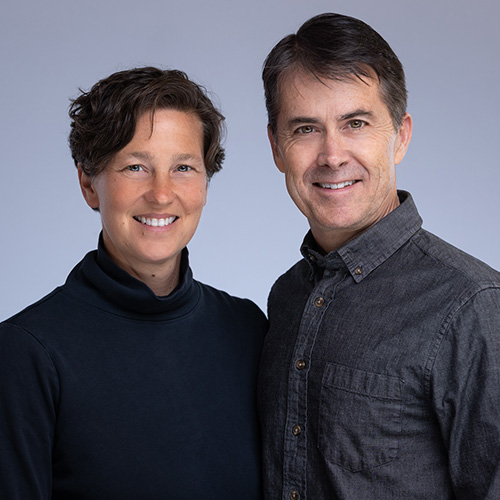
For learning businesses, it’s important to truly understand the learners they aim to serve. To help with that understanding, in this episode of the Leading Learning Podcast, number 418, co-hosts Jeff Cobb and Celisa Steele turn to a text that’s over 60 years old but still incredibly relevant.
In The Inquiring Mind, Cyril Houle divides lifelong learners into three categories: goal-oriented, activity-oriented, and learning-oriented. Learning businesses that understand the motivations and activities of each category will be better positioned to serve those learners and provide them with value.
To tune in, listen below. To make sure you catch all future episodes, be sure to subscribe via RSS, Apple Podcasts, Spotify, Stitcher Radio, iHeartRadio, PodBean, or any podcatcher service you may use (e.g., Overcast). And, if you like the podcast, be sure to give it a tweet.
Listen to the Show
Access the Transcript
Download a PDF transcript of this episode’s audio.
Read the Show Notes
Jeff Cobb: [00:00:00] In The Inquiring Mind, Cyril Houle divides lifelong learners into three categories: goal-oriented, activity-oriented, and learning-oriented. Learning businesses that understand the motivations and activities of each category will be better positioned to serve those learners and provide them with value.
Celisa Steele: [00:00:24] I’m Celisa Steele.
Jeff Cobb: [00:00:25] I’m Jeff Cobb, and this is the Leading Learning Podcast.
Jeff Cobb: [00:00:33] At Leading Learning, we focus on continuing education, professional development, and lifelong learning.
Celisa Steele: [00:00:39] Yes, and we say those phrases so often—continuing education, professional development, and lifelong learning—that, like all platitudes, they can lose some of their meaning because of the frequency of their use.
Jeff Cobb: [00:00:53] But, for learning businesses, it’s important to not gloss over those terms and instead to really understand what they mean because those terms are at the heart of understanding the audience you serve, that huge and mighty, if often unsung, throng of lifelong learners.
The Inquiring Mind: A Study of the Adult Who Continues to Learn and a Dedication
Celisa Steele: [00:01:12] To help us with understanding lifelong learners, in this episode, number 418, we want to turn to a text that’s over 60 years old, but it’s one that we consider foundational in what was, back in 1961, the early days of the field of adult education.
Jeff Cobb: [00:01:31] And the specific text that we have in mind is The Inquiring Mind: A Study of the Adult Who Continues to Learn by Cyril O. Houle.
Celisa Steele: [00:01:43] Now, that book might not ring a bell the way that perhaps The Adult Learner by Malcolm Knowles might ring a bell for listeners. But Houle was an influential thinker and an influential actor in adult education.
Jeff Cobb: [00:02:00] That’s right. In fact, he taught and mentored Knowles, so he played a big role in helping to shape some of that thinking that might be a little more well known at this point. In fact, I’m fortunate I’ve got a personal connection to Cyril Houle, mainly via his son David Houle, who I wrote a book with a number of years ago—Shift Ed. That was my first commercially published book that I coauthored with David. With that in mind, we’d like to dedicate this episode to Cyril Houle but also to David Houle, both important thinkers and influencers in our work.
Celisa Steele: [00:02:38] This is the first time we’ve dedicated an episode, but I think it’s very appropriate here, 418 episodes in, to make that dedication to David Houle and Cyril Houle.
Biographical Snapshot of Cyril Houle
Jeff Cobb: [00:02:51] Indeed. Breaking some new ground here. We referenced when Cyril Houle was working, but let’s give a little bit more of a biographical snapshot of him. He was born in 1913 and lived until 1998.
Celisa Steele: [00:03:08] 1998. I will say that he spent 40 of the years of that 85 years of life there. He spent 40 of those years as a faculty member at the University of Chicago. That’s, I guess, back in the day when someone could go and spend decades at a single institution.
Jeff Cobb: [00:03:24] It was a different world in academia back then, definitely. Houle attended the University of Florida at Gainesville, got a bachelor’s degree and master’s degree there in 1934, and was awarded a Ph.D. in adult education from the University of Chicago in 1940.
Celisa Steele: [00:03:43] He showed up at the University of Chicago in 1939, finished his Ph.D. in 1940, and then, like we said, stuck around for the next 39 years after that. The University of Chicago was where Houle and Knowles met and where they had that teacher-student, mentor-mentee relationship.
Jeff Cobb: [00:04:02] And so, in what was really a lifelong effort to identify and analyze the whole field of adult education, its themes, sectors of influence, Houle published 14 books, 21 monographs, and at least 145 papers, chapters, symposiums, introductions to books, and other analytical pieces. In addition, he published two books on the nature and processes of governing boards. In fact, those who work in the nonprofit world may be familiar with that governing board work.
Celisa Steele: [00:04:36] He’s received a number of major honors. There’s a Cyril O. Houle Award for Outstanding Literature in Adult Education. He also was deeply involved with the W.K. Kellogg Foundation for a long time, and they now have a program that supports Cyril O. Houle Scholars in Adult and Continuing Education. In general, even though you might not have heard of him before this episode, he really is an influential thinker and actor in the field of adult education.
Jeff Cobb: [00:05:10] Really, really was a titan in many ways, one of those people who just looms large if you’re going to be in this field of adult education. We mentioned that he authored quite a few books and articles. Some of his most notable works include The Inquiring Mind, which was published in 1961. That’s what we’re going to talk about more as we focus in on in this episode and the next one, a study on adult learners’ motivations and behaviors, something obviously very, very important to our audience.
Celisa Steele: [00:05:43] He also wrote a book called The Design of Education, that was published in 1972, and that really offered guidance on how to plan and how to evaluate adult education programs. And then, in 1980, he published Continuing Learning in the Professions, which really looked at the ongoing educational needs in professional fields, which might sound like something that listeners are probably interested in, at least a large swath of Leading Learning listeners.
Jeff Cobb: [00:06:09] Yes, plenty, plenty to dig into here. We did mention he was associated with the Kellogg Foundation. He held a long-term consultancy role there from 1976 to 1995 and significantly influenced the foundation’s educational initiatives.
An Overview of The Inquiring Mind
Celisa Steele: [00:06:24] Again, generally a really important figure in adult education, particularly when thinking about adult education outside of formal degrees and after the formal phase. Again, just a really brief biographical sketch, but we just wanted to give you a sense of when he was working and the types of topics and work Houle was doing. So now we want to focus in on one of those works, one of those books: The Inquiring Mind: A Study of the Adult Who Continues to Learn. This book was based on lectures that he gave at the University of Wisconsin-Milwaukee in the spring of 1960. He based those lectures and then the book on his own review of literature that existed around the burgeoning or beginning field of adult education at the time and also based on 22 in-depth interviews with lifelong learners. That’s the data that he was pulling on for those lectures and then for the book.
Jeff Cobb: [00:07:28] I’ll say it’s a pretty slender volume. We’re not talking about a huge tome here.
Celisa Steele: [00:07:32] It’s under 100 pages.
Jeff Cobb: [00:07:33] Yes, very readable. I love Houle’s style. He’s got a very engaging style. It doesn’t really feel academic at all, even though he is very serious about this topic and digging into it. The book deals with self-directed learning, obviously a topic that Malcolm Knowles also focused heavily on. Houle doesn’t really use that term per se, but that’s really what it’s focused on in the three chapters that make up the book.
Chapter One: “Two Educations”
Celisa Steele: [00:07:56] Yes, there are three chapters, as you just said, Jeff. And what we’re going to do is we’re going to focus on key points from the first chapter, which is called “Two Educations.” We’re going to focus on that in this episode, and then we’re going to do a part two of The Inquiring Mind in our next episode, number 419. Now, that first chapter, “Two Educations,” starts with an epigraph from Edward Gibbon’s Autobiography, and part of that quote is, “Every man who rises above the common level has received two educations: the first from his teachers; the second, more personal and important, from himself.”
Jeff Cobb: [00:08:35] Houle quotes other people; he also has a lot of material in here that’s very quotable from him, tweetable-type stuff. Or maybe it’s X-able-type stuff now—I’m not sure what you’re supposed to call it at this point. But I love in the opening, he writes, “The desire to learn, like every other human characteristic, is not shared equally by everyone…. [I]n a world which sometimes seems to stress the pleasure of ignorance, some men and women seek the rewards of knowledge—and do so to a marked degree…. The desire to learn seems, in fact, to pervade their existence. They approach life with an air of openness and an inquiring mind.” That obviously ties to the title. I know, for me, some of what Houle is saying in there certainly resonates right now, in the present time, all these years later.
Celisa Steele: [00:09:28] Yes, and the book, in large part, is an exploration of why some people are more inquiring than others, why they’re more likely to seek out learning opportunities and to continue to learn after their formal education is done. He’s opening that up with these two educations and that recognition that you just quoted, Jeff, that “the desire to learn is not shared equally by everyone.” So why not? Or what influences that? What leads to someone wanting to pursue lifelong learning? I will say that the strongest connection that he found was prior education: “The higher the formal education of the adult, the more likely it is that he will take part in continuing education. The amount of schooling is, in fact, so significant that it underlies or reinforces many of the other determinants, such as occupation, size of community, length of stay in it, and nationality and religious backgrounds.” That was a quote from that chapter as well. I think that’s interesting that he did try to look at some of the factors that might come into play, and the strongest correlation was with prior education.
Jeff Cobb: [00:10:37] Basically, learning breeds more learning when it comes down to it, which I think a lot of us instinctively appreciate. I think we have plenty of research out there that supports that, research mostly that’s happened since Houle. He was recognizing this early on. But we now know the incredible importance of early childhood education, elementary, secondary education, getting into post-secondary education, particularly in this world that we live in right now, really setting the stage for lifelong learning.
Celisa Steele: [00:11:08] I think it suggests that there’s a possibility, as a learning business, to really make sure that in the way you talk to your learners, whether that’s through marketing or once they’re at an educational event, to remind them that this is a continuation, that they have been learners, that they have been doing this all their life, and this is just the natural continuation. I think that could be something for more learning businesses to tap more consciously into—that direct appeal to their learners.
Partner with Tagoras

Celisa Steele: [00:11:36] At Tagoras, we partner with professional and trade associations, continuing education units, training firms, and other learning businesses to help them to understand market realities and potential, to connect better with existing customers and find new ones, and to make smart investment decisions around product development and portfolio management. Drawing on our expertise in lifelong learning, market assessment, and strategy formulation, we can help you achieve greater reach, revenue, and impact. Learn more at tagoras.com/more.
Three Types of Lifelong Learners
Jeff Cobb: [00:12:14] I’ll note that in analyzing those 22 interviews that he did, Houle did find that, while the backgrounds of the learners were diverse, and they were diverse in many other ways, what they shared with their similarity was that they were all deeply engaged in learning, and they regarded continuing education as an important part of their lives, even though they may have had somewhat different ways of thinking about it.
Celisa Steele: [00:12:41] And that difference in how they think about this shared, common emphasis on continuing education and on continued learning, what he does then in that rest of that chapter is try to look at the difference in how they think about the lifelong learning that they’re doing. He says, “While they were basically similar, they”—meaning these lifelong learners that he did the interviews with—“did vary in terms of the major conception they held about the purposes and values of continuing education.” And then, as he and the other folks involved on his team analyzed these interviews, what they ultimately landed on was three groups, three categories of lifelong learners that they felt described those differences, the variation among those lifelong learners. The three groups are goal-oriented, activity-oriented, and learning-oriented.
Jeff Cobb: [00:13:41] Yes, and it’s been probably close to a decade since the first time I read this book. The little copy I have I actually borrowed from David Houle. David, I will give this book back to you at some point soon. But one of the main things that I took away from the book, that I remember from it—it’s at the heart of it—is these three different groups of learning. I think they’re very helpful in enabling learning businesses, learning business professionals, to think through the large swaths of learners that they’re serving. That first one, goal-oriented, Houle describes as “those who use education as a means of accomplishing fairly clear-cut objectives.” These are the people who are doing the education because they want to get ahead on the job, they want to get a promotion, or they want to do something very practical, like learn how to replace a broken door latch on a dryer.
Goal-Oriented Learners
Celisa Steele: [00:14:34] For these folks, he notes that their approach to their ongoing education tends to happen in episodes because what happens is that learner has a realization of “Hey, I have this need to fix the broken dryer-door latch,” or “Hey, I want to apply for that job that’s going to be opening, and I know, in order to do that, I need to be able to say that I understand how to do public speaking” or something. They have that recognized need, and that leads to an episode of learning. They start with that goal in mind that drives them to identify a learning opportunity, an educational experience, and then they pursue it. It’s not a steady, continuous stream of learning; it’s more episodic, based on need.
Jeff Cobb: [00:15:20] I think we all know these people, the ones in our database who came to the course three years ago or the conference three years ago and don’t show up again for another three years or haven’t shown up again yet at all, but they will eventually, as soon as this goal-oriented need arises again, and they need that education to satisfy that need.
Activity-Oriented Learners
Celisa Steele: [00:15:38] That’s the first of the three groups: goal-oriented. The second group is activity-oriented. Houle describes this group this way: These are learners “who take part because they find in the circumstances of the learning a meaning which has no necessary connection, and often no connection at all, with the content or the announced purposes of the activity.” Now that might not make sense just hearing that excerpt, but what he goes on to explain is that there are people who will seek learning opportunities because they’re lonely, or maybe they have an unhappy homelife, or maybe they’re looking to make friends or potentially even find a life partner. For these are the kind of people it doesn’t matter as much what the topic is, as with those goal-oriented. What they want is that activity orientation that’s going to put them around other people, where they can potentially make friends or potentially be less lonely or whatever that driver is for them.
Jeff Cobb: [00:16:40] I imagine this is probably also the people who show up, say, at a conference mainly for networking, just to be there among the professional scene and connect with people, and learning is somewhat secondary to them—even though we know that in those social interactions they are, in fact, learning a great deal.
Celisa Steele: [00:16:57] Another subgroup of the activity-oriented has to do with what we might call check-the-box learners. Houle describes them this way, that they take “courses simply for the credits themselves or for the diplomas, certificates, or degrees which may eventually be won by piling up the proper number and kinds of credits. Such people care little (often nothing) for the subject-matter itself and, at the end of a term, they may be found in a long line at the bookstore selling back the volumes which they had been required to buy and for which they now feel no further need.”
Jeff Cobb: [00:17:32] I like too that he puts this in the activity-oriented group because my initial instinct was the people who just want CE, for example—that’s a big part of those checkbox learners—that’s their goal, to get CE. But that’s really not true. I think most of those people don’t care about getting CE credit. They’re just going through the motions because they have to, basically. They’re engaging in the activity. They know it’s going to result in this credit, which they have to have to maintain whatever they have to maintain, but they don’t really care. They’re just going through the motions, basically, and, as we said, checking the box.
Learning-Oriented Learners
Celisa Steele: [00:18:03] The third subgroup is the learning-oriented. He describes these folks as “seek[ing] knowledge for its own sake.” For this group, he says that “education might almost be called a constant rather than a continuing activity.”
Jeff Cobb: [00:18:22] The fundamental purpose that lies in the activity for these people is just simply the desire to know. That’s how Houle puts it, that that’s what they are seeking. In my mind, if you’re in the learning business, if you love learning yourself, then this is probably the kind of learner that you’re rooting for. But also that ideal learner that we think and hope that we’re designing for and delivering learning experiences for…and I’m not sure if Houle really goes into how these break down in his mind in terms of percentages…
Celisa Steele: [00:19:00] Again, it’s 22…
Jeff Cobb: [00:19:01] It’s 22. It’s a very small sample, so it would be purely speculation. My personal speculation would be that this is a smaller portion than the activity-oriented and goal-oriented learners.
Not Pure Types
Celisa Steele: [00:19:13] The other things I would add here are that he does make the point that these three subgroups or categories of the learners—the activity-oriented, the goal-oriented, and the learning-oriented—aren’t pure types, but that you do tend to see an emphasis from a particular learner, and they tend to fall into one of these camps than the other. But it’s again not 100-percent clear, and some people might differ on where you might put a particular learner—to your point, even, Jeff—around check-the-box and where he puts those learners. One could potentially make an argument, or some of those check-the-box learners might also fall a little bit into that goal-oriented, or maybe they’re a little bit more on the goal-oriented end of that activity-oriented spectrum, if you want to go that route.
Jeff Cobb: [00:20:01] I think, as always, so much depends on context and what the motivations of the learners are. I think we’re probably all different types in different times. For me, if it’s anything that has to do with becoming better at music, better as a songwriter, or something I’m personally passionate about, I’m going to be learning-oriented. I just want knowledge. I’m entirely motivated to do that. If it’s about how we’re going to fix something around the house, I’m probably much more goal-oriented because I’m not all that passionate about that. I just want to get it done.
Celisa Steele: [00:20:32] He does make the point too that the learning-oriented are more different from the other two types than the other two types are from one another, if that makes sense. The learning-oriented, because of that true focus on knowledge for knowledge’s sake, just the desire to know, really driving them, that sort of motivation is a little bit different than the goal-oriented and the activity-oriented, which, while different, both have a certain level of utility behind them. And so he does make that point that this group is a little bit different than the other two.
Jeff Cobb: [00:21:10] Right. I know we’re going to talk about other chapters in a future episode here, but maybe we could tie a bow around this very important chapter of this book.
Celisa Steele: [00:21:21] At the end of the chapter, Houle writes: “If adult learners really fall into these three groups, this fact will be useful in understanding and guiding adult education.”
The Impact of Connecting with Your Learners as Goal-, Activity, and Learning-Oriented
Jeff Cobb: [00:21:33] Useful statement there because you can unpack that. For example, what if a learning business developed personas for each of these groups? Could you, for example, characterize your e-mail list, your members, your learners into these buckets? And what might you do with that?
Celisa Steele: [00:21:51] That might help you in terms of how you develop and deliver your marcom. What does marketing and communications look like? If you can identify a learner as primarily activity-oriented versus learning-oriented versus goal-oriented, might the message that you send be a little bit more tailored, a little bit more likely to get them to say, “Yes, that looks like an educational experience for me”?
Jeff Cobb: [00:22:17] Even if you can’t identify that at the specific learner level, mix up your messaging a little bit because you’re going to have all three types out there, broadly. So don’t send out an entire campaign that’s only goal-oriented or only activity-oriented or only learning-oriented. You want to mix that up some to try to hit those different motivations.
Celisa Steele: [00:22:37] Right. Because the strong likelihood is that you will always have a mix of all of these types of learners that you’re targeting for any particular educational offering and that you ultimately have participating in any particular educational offering. Like you said, Jeff, probably making sure that you’re balancing your messaging and your work around motivation to speak to all three of these types of learners would make strategic sense.
The Other 50 Years
Jeff Cobb: [00:23:02] Right. One other thought or quote we’ll take from Houle in wrapping up this chapter, he writes that, “Adulthood offers to the average individual 50 years in which to learn how to solve his own problems as well as explore the wonderfully inexhaustible realms of knowledge.” Listeners may know that I’ve been fond of using this term, “the other 50 years,” that’s come up quite a bit. I actually don’t even remember potentially getting that from Houle, but I suspect I probably did or at least unconsciously took that from him.
Celisa Steele: [00:23:36] It struck me when I was reading that chapter recently, given that I know you do talk about the other 50 years. So, Jeff, I was wondering if that might have been the origin of where you….
Jeff Cobb: [00:23:47] Possible. Who knows?
Celisa Steele: [00:23:48] Yes, but I think one of the interesting things there is that this “other 50 years”—and, obviously, that’s a placeholder number; it might be less or more given any particular individual—but, if, as a learning business, you can form a relationship with a lifelong learner, someone with this inquiring mind, at the beginning of those 50 years, then there’s a lot of value that learner can get from your learning business, that you, as a learning business, can provide to that learner over those decades. That’s really exciting to think about having impact on a lifelong learner over decades.
Jeff Cobb: [00:24:24] Yes, and that’s something we’ve also talked about a fair amount. We have a post somewhere about being in the career business, which is often what particularly trade and professional associations would be in, because you’re getting that person who’s entering a particular profession or career, and, if they stay your member, if they stay involved with you, then you’re going to have them for that 50 years or 60 years or whatever it is, and to start thinking about them in that way and start thinking about how they might shift in and out of some of these different learner groups across that time period. In general, I think it can help any learning business be more thoughtful, more strategic about how they’re serving lifelong learners.
More from Cyril Houle to Come
Celisa Steele: [00:25:02] That’s our look at the first chapter of The Inquiring Mind. The first chapter is called “Two Educations.” We will be talking about chapters two and three in our next episode, episode 419. We encourage you to come back and listen for more from this great thinker, Cyril Houle.
Jeff Cobb: [00:25:31] In The Inquiring Mind, Cyril Houle divides lifelong learners into three categories: goal-oriented, activity-oriented, and learning-oriented. Learning businesses that understand the motivations and activities of each category will be better positioned to serve those learners and provide them with value.
To make sure you don’t miss new episodes, we encourage you to subscribe via RSS, Apple Podcasts, Spotify, Stitcher Radio, iHeartRadio, PodBean, or any podcatcher service you may use (e.g., Overcast). Subscribing also gives us some data on the impact of the podcast.
We’d also be grateful if you would take a minute to rate us on Apple Podcasts or wherever you listen. We personally appreciate reviews and ratings, and they help us show up when people search for content on leading a learning business.
Finally, consider following us and sharing the good word about Leading Learning. You can find us on X (formerly Twitter), Facebook, and LinkedIn.
 Connection with Ginger Johnson
Leave a Reply