The new year will be here before we know it, so now is a natural time to make plans. While it can be tempting to copy and paste this year’s plan, make a few tweaks, and move ahead, now is a great time to reflect more deeply on what your learning business does and why.
This episode of the Leading Learning Podcast pulls on past interviews to offer six perspectives that might help you rethink and reimagine the year ahead. Tessa Forshaw, Eric Ries, Luke Dowden, Artesha Moore, and Stephanie Mercado each speak to the importance of questioning a default, and Nancy Harhut is our reminder that that questioning isn’t the same as following through.
To tune in, listen below. To make sure you catch all future episodes, be sure to subscribe on Apple Podcasts, Spotify, or wherever you listen to podcasts.
Listen to the Show
Access the Transcript
Download a PDF transcript of this episode’s audio.
Read the Show Notes
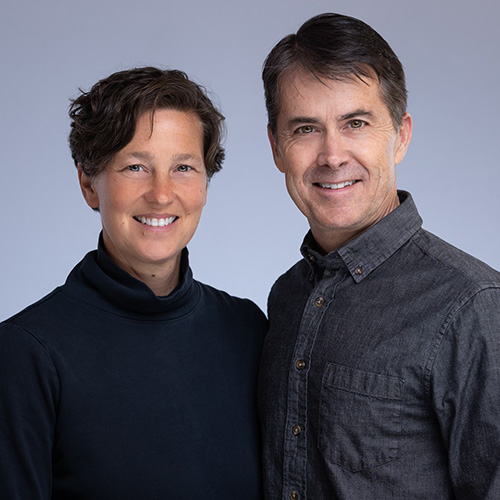
Celisa Steele: [00:00:03] If you want to grow the reach, revenue, and impact of your learning business, you’re in the right place. I’m Celisa Steele.
Jeff Cobb: [00:00:10] I’m Jeff Cobb, and this is the Leading Learning Podcast.
Celisa Steele: [00:00:16] As one year winds down and you look ahead to the next, it can be tempting to copy this year’s plan, adjust a few dates, make a few tweaks, and carry on. Consider this an invitation to do something different.
Jeff Cobb: [00:00:29] In this episode, number 489, we’re trying a compilation format—six clips pulled from past conversations and curated because each, in its own way, pushes past tweaking toward genuinely questioning a default.
Celisa Steele: [00:00:44] Cognitive scientist Tessa Forshaw pushes back on the common assumption that learning is about content, and Eric Ries, author of The Lean Startup, talks about why testing beats forecasting, especially in times of change.
Jeff Cobb: [00:00:56] Artesha Moore of Association Forum, Luke Dowden of the Alamo Colleges District, and Stephanie Mercado of the National Association for Healthcare Quality give an example of what it looks like to question fundamental assumptions in their organizations.
Celisa Steele: [00:01:12] And Nancy Harhut, author of Using Behavioral Science in Marketing, adds a reality check. Present focus bias doesn’t just stop learners from signing up—it’s also what will stop us from following through unless we build in nudges for ourselves.
Jeff Cobb: [00:01:27] Five different people speaking to the importance of questioning the status quo, and one caution that asking questions isn’t the same as follow-through. Let’s jump in.
Tessa Forshaw on Why Learning Businesses Shouldn’t Focus on Content
Celisa Steele: [00:01:42] First up is Dr. Tessa Forshaw, a cognitive scientist and faculty member at the Harvard Graduate School of Education. Tessa questions a default many learning businesses don’t even think to question: that learning is fundamentally about content. She argues learning is a neurobiological process, which has profound implications for what a learning business offers and how it offers it.
Celisa Steele: [00:02:05] I would love to hear what you see as some of the biggest mismatches between that science of learning and what we know and then the way that adult workers are commonly taught or the way we design learning for those adult workers.
Dr. Tessa Forshaw: [00:02:20] I love that that’s what you’ve gleaned from my work. I definitely think that. When I talk to a lot of learning leaders, learning is often discussed as content delivery. They will talk about learning as the content that is being created or the event that is being held. But it’s really important that we remember that learning isn’t content. Learning is a neurobiological process, and that process is influenced by chemicals in our brain and hormones in our body that are shaped by the environment and the context that we sit within. When we understand learning in that lens, it both opens up where learning can happen and what it looks like, but it also puts the responsibility of establishing the conditions that create and foster those positive neurochemicals and hormones to incite learning and alleviate the ones that don’t. And it puts that responsibility on L&D teams or on organizations providing learning experiences in a way that it hasn’t typically been considered before.
Celisa Steele: [00:03:35] You were saying, before we got started, that one of the things that you talk about in the certificate are five principles for the future of workplace learning. Could you outline and briefly explain those five principles?
Dr. Tessa Forshaw: [00:03:50] Yes, I absolutely can. The five principles that we talk about start with this idea: Learning is biological. We understand that behavior change comes from changes in the mind, which comes from changes in the brain, which comes from changes in the cell. I’m sure you’re familiar with those games that were really popular about ten years ago, where they were all like, “Neuroplasticity!” There was a lot of fake going on there, but there is a seed of truth or a grain of truth, and that is that neuroplasticity is the foundation of learning. The ability for us to create a new neural pathway between two neurons is the foundation of all learning. When we understand that the cell influences the brain, which influences the mind, which influences behavior, that helps us think about how we can create learning in organizations, especially because so many workplaces are full of things that make that biological process harder. They’re full of cortisol. They’re full of cognitive overload. They’re full of constant context switching. They’re full of being triggered and having your amygdala hijacked when stress takes over, and your brain doesn’t operate at its peak performance anymore. When we understand learning is biological, we can also start to understand that learning at work is very rarely about effort or attention, and it’s much more about the conditions in our bodies, in our environments that are blocking this cellular change from happening. So that’s one component.
Dr. Tessa Forshaw: [00:05:24] The next principle is that learning is social. We know from decades of research on expertise development and the nature of learning that people become experts by being around people who are further along in that area of expertise. Having people more experienced share mental models, expose their reasoning to you, and foster that traditional romantic idea of apprenticeship that we have from hundreds of years ago. So learning is very social, and it happens in relationships with others. The third principle is that learning is situated. This is focused on the idea that pulling people out of work to go and learn is a tough design choice because the brain encodes skills along with the context in which they are learned in. A lot of people don’t realize that our environment plays a huge role in the retrieval of learning because we associate different knowledge and skills, practices to the physical environment in which we learn them. When we’re in those environments, they can help us cue it forward. If we learn something in an abstracted classroom in a beautiful L&D center that’s off-campus, and then we’re supposed to go back and apply it on a factory floor, that’s going to be very hard because the environment isn’t cueing that knowledge that we’ve learned to be brought forward, and those retrieval pathways aren’t yet strong because it’s new knowledge.
Dr. Tessa Forshaw: [00:07:03] The fourth principle is that learning takes effort. We talked a little bit about learning being a biological process and there being the creation of a pathway between two neurons. If you could imagine a bank of sand, and you have a stick at either end, and you want to create a pathway between the two of them that stays, you have to really dig into the sand and put some effort in there. That’s the same in your mind—you actually need effort to forge that pathway. Learning takes effort. Being easy and super fun isn’t necessarily what we’re going for. We’re going for experiences that provide opportunities for effort. Finally, that learning has to transfer so that the point of learning is that it can be applied in future contexts. Especially today, where those future contexts are often ambiguous, and we don’t know how they’re going to change, that means that when we think about learning, we have to think about designing opportunities to expansively frame all of the different ways things could be applied, and, again, that’s part of helping that encoding in a way that’s much easier for us to retrieve it at that moment of need. So those are five principles.
Artesha Moore on the Innovative Power of Reimagining
Jeff Cobb: [00:08:22] Next is Artesha Moore, CEO of Association Forum. Artesha questions the default board conversations that center membership growth and retention by running an exercise that reimagines her organization from a blank slate. She closes with a rule she holds herself to every year: Do something you’re willing to fail at.
Artesha Moore: [00:08:42] I did an exercise and led a facilitation with our board a couple of years ago, and it was all around Marvel’s cartoon show What If…? What if we were in an alternate universe? I used ChatGPT to come up with…. I said, “Here’s the plot. We are this. We’re a $3 million organization. We focus on this. We do this. What if…? Open it up.” It gave, “You could be this kind of business. You could be this.” And then—I love Shark Tank—I gave the prompts to the board and put them on teams: “Now take this and do it. Y’all pitch it to us like Shark Tank.” Here’s what it did: It stopped the conversation about membership growth, acquisition, and bringing back the community, and so what could we do? We went to market these ideas. Skills became really big for us. We did a skill study. We did this. We did this what-if—playing games. They pitched it. There was some of it that was fun, but it unleashed their brain of what could be possible. Right now, whoever’s listening, open up an AI—whatever your favorite one is—and start to say, “If I had nothing, what could I be?” Don’t give it a whole bunch of “We’re this and that and this” because that just defeats the mission. Use a wide view. You don’t have to build that today. Stop being so literal. Have an imagination. Then go for a walk. You know what it’ll do? It’ll get you thinking about something different. I love all of my alphabets: ASAE [American Society of Association Executives], Association Forum, and PCMA [Professional Convention Management Association].
Artesha Moore: [00:10:32] We are doing hard work as associations because we compete with LinkedIn. We’re a leadership development, and so LinkedIn is always like, “How did I get out here?” Reimagine. Imagination is key. But it’s got to be with the board. It can’t just be with your staff because then you create this us-against-them. We do see things differently as staff, but, if you start to imagine what you could be, that would be the thing I would say: Just imagine. Don’t put a lot of constraints on it. And then the other part is do something that you’re going to fail at every year. Every year, do something that you are going to fail at—and that doesn’t have to be big at work. It could be at home. I’m a painter now. I’m terrible. But you know what, Bob Ross, thank you for inspiring me because I’m almost 50, and I started painting maybe in the last three years. It has unlocked what I never imagined, which was creativity in my technical work. Use that AI to challenge what you think. I probably have, at least every three weeks, a session where I just argue with the AI. But try some new stuff. And then, Jeff, you’re doing great work in this space. You have people on that have interesting ways of looking at things. It doesn’t matter what your industry is. Especially for those at the top, top, innovation is what we’re hired to do, but navigation is also needed. You need a direction that you’re going that inspires—and then I think we’ll make it on the other side of this thing.
Eric Ries on the Staying Power of the Minimum Viable Product (MVP)
Celisa Steele: [00:12:23] Eric Ries, author of The Lean Startup and Incorruptible, questions the default businesses have run on for a century: that planning and forecasting are how you manage uncertainty. He makes the case that when the ground keeps shifting, testing beats forecasting every time.
Jeff Cobb: [00:12:39] I’d love your perspective—15 years out from publishing the book, how has that concept held up from your viewpoint, and how has it evolved over that time period?
Eric Ries: [00:12:51] It’s held up pretty well. People get it confused all the time because people think, “Oh, if we’re just building a minimum product, that’s opposed to quality or long-term planning or something like that.” But the point of minimum viable product is simply, if we’re in a situation where there’s going to be a long number of steps that have to unfold in order for whatever the thing is to be successful—I can tell you stories about where the thing itself is like a whizbang gadget; a cool platform; a deep-sea, oil-well-drilling platform; an internal process change; or a new curriculum (I really have seen every kind of thing you can imagine this thing can apply to)—there are two dimensions (I said this 15 years ago or more) of the world that are going to make this more and more difficult. One is the changes in the technological landscape are going to democratize the tools of production but also drop cycle times. So things are going to get faster. It’s going to become easier for more people to build things, try things, communicate things. That prediction’s held up pretty well.
Eric Ries: [00:13:51] But, at the same time, we’re going to see a great increase in the level of underlying uncertainty about what’s going to work. Partly, number one, because consumers, employees, and whoever we’re trying to reach, students, they all have more options than ever before, and they’re facing a bewildering array of experts, advice, best practices, advertising, and the fragmentation of social media. When we have that combination of fast cycle time capability and extreme uncertainty in the environment, we need a process, a structured way of thinking about what to do with the infinity of things we might do. Traditional management, general management that has been practiced all over the course of the 20th century, was based in two principles: the principle of planning and the principle of forecasting. If you go back and read the foundational works of 20th-century management thinking—Fred Taylor. I’m thinking especially of Alfred Sloan’s My Years with General Motors because he really lays out how difficult it was to run a business without these concepts. It was very difficult. The key idea is that, in order to make a plan, in order to hold people accountable to that plan, we need to have an accurate forecast of what’s supposed to happen. If you want to claim credit for having done a good job as a manager, you can’t just say, “Well, I sold more cars this year than last year.” Maybe the economy’s up, and everybody sold more cars this year.
Eric Ries: [00:15:10] Similarly, you can’t say you’re fired because you sold fewer cars than last year. Maybe we’re in a recession, and, if you did slightly less bad than everybody else, that’s a win. The key is to be able to forecast and beat the forecast. Most of us have been taught that in our careers, not as an idea but just as the way work is done. The hidden assumptions are the killers, always. Most people that I talk to cannot imagine that this idea ever had to be invented. To them, it’s as natural as gravity. But it’s not. It was an idea. It was invented at a certain time. It has certain strengths and also certain liabilities—the biggest one, where do accurate forecasts come from? Accurate forecasts require a long and stable operating history from which to extrapolate. And who feels like the world is getting more stable every day? Uh-oh. First of all, whenever we’re doing something new, we’re doing entrepreneurship, no matter what it says on our business card. A lot of people become what I call “involuntary entrepreneurs” when the world changes around them, and, all of a sudden, they’re having to scramble to reinvent something they’ve done consistently, maybe for many, many years. Parallels to AI are pretty obvious. That is the essence of minimum viable product: to figure out what is the structured, scientific, least-effort way we can discover whether the core business hypothesis that we are operating against is true or false.
Luke Dowden on Shaping Experience to Match Your Market
Jeff Cobb: [00:16:35] Luke Dowden, vice chancellor for Digital Learning and Transformation at the Alamo Colleges District, questions the default academic calendar. He describes pushing for a different structure and sticking with it, against initial skepticism, until it became the norm.
Luke Dowden: [00:16:51] You ask about the challenges faced. Understanding the market, that’s something that I’ve watched different organizations struggle with. Do they really understand the market that they’re serving? And then will you adapt the delivery in a fast enough method that you can serve more of the market? Meaning that, “Well, should we just always offer them in sixteen weeks, or could it be eight weeks?” One of the institutions I was at, I said, “We want to do what we do in the summer, twice in the fall and twice in the spring,” and people looked at me funny because we would have an eight-week session in the summer and two four-week sessions. I said, “We just want to do what we do in the summer, twice in the fall and twice in the spring.” And I said that enough that, when I had left that organization, that’s what they were doing. You can create a self-fulfilling prophecy. What I mean by that is create the conditions that you are doing something, but you’re maybe doing it over here, and you need to think about your calendar or how you’ll approach the rhythm or the different options and the different configurations of learning.
Luke Dowden: [00:17:58] In Oklahoma one time, there were 52 Tuesdays. So, 52 Tuesdays, if you come, you can earn your degree. And so I still think that there are those opportunities to improve. A couple of the other challenges to your original question of adapting and understanding the market is you do have people that stop in and out. When you work with folks that are learners, that learning is not going to be the first priority because of other priorities in their lives. Then you have to create a way for them to come back in easily. A lot of the work that I did at the last institution in Louisiana was around designing for people to stop out, expecting that, and creating pathways for them to come back in. And the hardest part is that there’s a lot of competition for people’s attention. We’re competing for attention. You’re not just competing against an online competitor or another brick-and-mortar competitor, but you’re creating an experience. Think about the things that we like to go and spend money and time on. I would say that people are very mindful of the experience they want, the expectations they’re coming in with. I think there’s also a new set of expectations that learners are bringing with them, based on what they’re experiencing with other services.
Nancy Harhut on the Behavioral Science View of Follow-Through
Celisa Steele: [00:19:26] Next up is Nancy Harhut, author of Using Behavioral Science in Marketing. Nancy is this episode’s reality check. Even if you’ve decided to question a default, present focus bias can keep you from following through on making changes. She talks about what it takes to get people moving.
Celisa Steele: [00:19:44] A lot of our listeners offer certifications, education, all sorts of professional development opportunities, and these are things that the people they serve will say that they value, but they still won’t necessarily do them. They’ll still postpone them or not sign up for that course or that conference. Talk about what behavioral science might help us understand about why adults might delay acting, even on things that they say they themselves value and matter to them.
Nancy Harhut: [00:20:19] That’s a great question. What it comes down to is very often people will say one thing and do another. You’re like, “Why did they lie to me?” But they didn’t really lie. They believed what they were saying at the time, but then something else happened. A couple of things happened. One is this idea of present focus bias. Behavioral scientists have found that humans love instant gratification. We want what we want, and we want it now. And, if the payoff is a little bit further down the road, if it’s more distant, we have a tendency to devalue it. Imagine you’ve got $100 in your hands. You’d probably like to go out to dinner and a show versus save that money for a rainy day, put it in your retirement account. It’s the same thing with education. It’s like, “Yes, I think this is a great idea. We should have professional development. We should have these courses. We should have these Webinars or seminars or conferences. And, yes, I want to go, but not today. I’m going to do it later.” Because the payoff is later. “I have to go. I have to learn this, and, eventually, it’s going to help me in my career.” And because it’s a more distant payoff, we’re less likely to act on it right away. We want the immediate gratification.
Nancy Harhut: [00:21:31] Another thing that behavioral scientists talk about is something called the intention-action gap. And there, again, it’s like, “Yes, I intend to take this. Yes, I want to. Yes, I think this is a great idea.” But we just don’t quite get around to doing it. We think we’re going to. We assume that we will. It makes sense at the time. And yet other things come up. Things distract us. Things get in the way. The important takeaway here is it’s not that people are lying when they say they value this, that it’s important. They’re not lying. They’re not really good at predicting their future behavior. There are some behavioral science studies that show a complete stranger can better predict what you will do in the future than you yourself can. So it’s tough. That’s what we’re working against. What marketers need to do is to overcome that idea of present focus bias. We need to build a bridge between who you are right now—saying, “Yes, I work in this field, and I like this field, and I want to continue to succeed in this field, and so I want to keep learning and growing.”—and the person who is actually going to benefit from it. It’s like, “You’re saying this right now, and, if you really believe that you want to do well in this field, and staying in this field requires continuing education, then you need to take this step so that one month, one year, two years down the road, you’ll have what you need.”
Nancy Harhut: [00:22:59] There are ways to create that bridge. One is by getting you to think of yourself today but in the future—so using words like “imagine.” “Imagine having this new certification.” “Imagine having taken this class and learning these three points.” Because, if you ask someone to imagine something, they can create that mental picture. And, if they can create the mental picture, they’re much more likely to act on it. Because, when you think about it, when people make a decision, it happens twice. It happens once in their brains, once in their heads; they decide to do it. And then they physically do it. Build that bridge by saying, “Imagine yourself…” or “Can you see yourself…?” or “Picture yourself….” That can be very, very helpful. The other thing we can do, again understanding that people prefer instant gratification, we can pull some little element out where we do get instant gratification. If we’re asking someone to sign up for a course, and the course is going to take ten weeks, or we’re asking them to sign up for a conference and the conference isn’t for three months, that’s not instant gratification. But maybe you can sign up in a minute—that’s instant gratification. Or maybe “Sign up, and we’ll immediately send you the cheat sheet or the curriculum.” Anything that we can pull forward that has instant gratification, even if it’s just a small element of the larger course, conference, what have you, that can work in our favor in terms of overcoming present focus bias.
Stephanie Mercado on Tackling the Existential Question
Jeff Cobb: [00:24:34] We’ll close with Stephanie Mercado, CEO of the National Association for Healthcare Quality. Stephanie asks a question many leaders might be afraid to ask: Should this organization even exist?
Celisa Steele: [00:24:48] Based on your experience, what advice—or maybe it could be a question to consider—what would you offer to other association CEOs or learning business leaders as they’re trying to think about, “What do I need to do to be successful?”
Stephanie Mercado: [00:25:04] I’m a big fan of the notion that Simon Sinek brought forward, which was start with why and that people don’t buy what you do, they buy why you do it. I think that the secret to make you success or the secret to my success has really been searching for those answers. Why are we here? What can we do that nobody else can do as good as us? And how can we add value to the market and solve those challenges? I remember, when I first joined NAHQ as the executive director, I heard in the interview process that the board was looking for what I would categorize as more, better, faster. But when I asked them, “Specifically, more, better, faster what?” no one could really articulate what that was. I went in search of finding out what it might be that we could do that would really add value to the market and be our differentiating value proposition. The question I asked every board member and five past presidents and everybody who happened to be on our advisory board at that time, so about 25 people, I interviewed, and I said, “If NAHQ was wiped off the face of the earth tomorrow, would anyone start this organization again and why?” And that was a question that stopped everybody in their tracks, and they’re like, “Oh my gosh! I don’t know. I’ve never thought about it.”
Stephanie Mercado: [00:26:32] I think that when you take a breath and say, “Okay, what are we really trying to do here, and let’s get consensus on what that is,” it doesn’t start with tactics. It really starts with the problem that you’re trying to solve for. Luckily for us, what became very clear to me as I asked that question, “If NAHQ was wiped off of the face of the earth tomorrow, would anybody start it up again and why?” the answer was because we’re the only organization focused on workforce competencies for quality and safety. All right, then let’s do more of that. Let’s do that really, really well. We don’t have a competency framework. We should build one. We don’t have a competency-based assessment. We should build one. We don’t have a way to work with healthcare organizations. We should find a way. That, I think, has been really, really important. I think that the secret to NAHQ’s success and the secret to my success is to be intentionally curious and persistent and not give up because it was hard. It took a long time for us to answer that question. I had some of the people I admire and respect said, “Stephanie, I don’t know why you’re trying so hard. Maybe there isn’t an answer.” I said, “I know that there’s an answer, and we’re going to figure it out.” And we did.
Recap and Wrap-Up
Jeff Cobb: [00:27:55] We just heard six perspectives that might help you rethink and reimagine what your learning business does and how it does it going forward. Instead of treating next year as this year plus a few tweaks, take time to question the default.
Celisa Steele: [00:28:10] Links to the full episode these clips came from follow.
Jeff Cobb: [00:28:20] I see Tessa Forshaw’s reminder that learning is neurobiological and Eric Ries’s case for testing a hypothesis instead of trusting a forecast as two sides of the same coin: Question the default before you build on it.
Celisa Steele: [00:28:35] Really, that idea of questioning the default is at the heart of all we heard. It’s there in Luke Dowden’s insistence on changing the standard academic calendar, Artesha Moore’s board exercise, and Stephanie Mercado’s willingness to question whether anyone would even start her organization today.
Jeff Cobb: [00:28:52] And Nancy Harhut is our reminder that questioning something isn’t the same as doing something. Present focus bias doesn’t just stop learners from signing up—it’s what will stop us from following through too, unless we build in nudges for ourselves.
Celisa Steele: [00:29:07] Thanks again for listening—and see you next time on the Leading Learning Podcast.
To make sure you catch all future episodes, please subscribe on Apple Podcasts, Spotify, or wherever you listen to podcasts. Subscribing also gives us some data on the impact of the podcast.
We’d be grateful if you’d rate us on Apple Podcasts or wherever you listen. Reviews and ratings help the podcast show up when people search for content on leading a learning business.
Finally, follow us and share the word about Leading Learning. You can find us on LinkedIn.
 Auditing Portfolios and Pressure-Testing Strategy with Lauren Brechner
Leave a Reply